Welcome to Yongyi Fasteners, Your Reliable Fastener Supply Partner!

-
ProductsWe supply flat washers, spring washers, drop-in anchors, anchor bolts, hex nuts, hex bolts, sleeve anchors, threaded rods and OEM fastener products to DIN, BS, ANSI and MS standards.

-
About usHEBEI YONGYI FASTENERS MANUFACTURING CO.,LTD is located in China's largest fasteners production base Yongnian fasteners centre.
-
NewsHebei Yongyi Fasteners shares company updates, product knowledge and fastener industry news for global buyers.
-
ServiceThe products sold throughout the domestic and exported to Southeast Asia and Europe and other countries and regions. Our products win good reputation with domestic and foreign customers.



YONGYI FASTENERS
Support stable quality from material selection, processing and inspection to final delivery.
FOCUS ON HOT SPOTS

304 vs 316 Stainless Hex Bolts Which Is Best for Your Project
Published:
2026-04-15
Author:
YONGYI FASTENERS
Choose between 304 and 316 stainless hex bolts based on your project's exposure to moisture, chemicals, and budget for lasting performance

If you need fasteners for inside jobs, 304 stainless hex bolts work well. You should pick 316 for boats, chemicals, or tough places because it fights rust better and lasts longer. The main differences are how they stop rust, how much they cost, and where you use them.
Think about these things for your project:
Changes in temperature
Chemicals nearby
Wetness and humidity
This guide helps you pick the right stainless hex bolts for your job.
304 and 316 Stainless Hex Bolts Overview
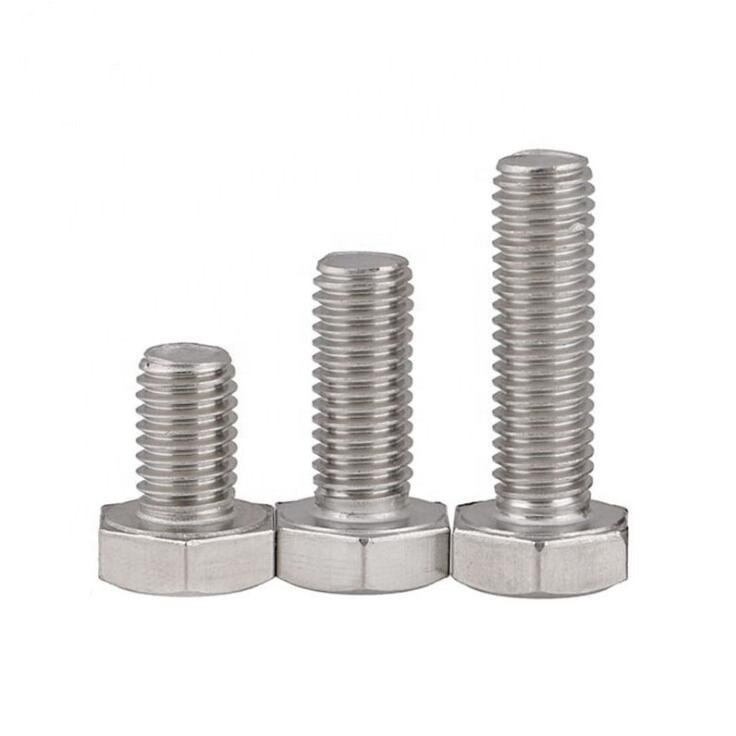
When you choose stainless hex bolts, you often see two main types: type 304 stainless steel and type 316 stainless steel. Both belong to the austenitic stainless steel grades, which means they have high strength and good resistance to rust. You need to know the difference between 304 and 316 to pick the right bolt for your project.
304 Stainless Hex Bolts
Composition and Features
Type 304 stainless steel bolts contain about 18% chromium and 8% nickel. This mix gives them a shiny look and helps them resist rust in most indoor and dry settings. You can trust these bolts for their strength and easy maintenance. They do not have molybdenum, so they do not handle saltwater or harsh chemicals as well as some other bolts.
Tip: If you want a visual, picture a simple diagram showing the atoms of chromium and nickel packed together. This structure blocks rust from forming on the surface.
Common Uses
You will find 304 stainless hex bolts in furniture, indoor railings, and general construction. Many people use them in automotive parts and machinery that stay dry. These bolts work well in places where you do not expect a lot of moisture or chemical exposure.
316 Stainless Hex Bolts
Composition and Features
Type 316 stainless steel bolts have a different mix. They contain about 16% chromium, 10% nickel, and 2% molybdenum. The molybdenum makes a big impact. It helps these bolts fight off rust from saltwater and strong chemicals. You can count on 316 stainless steel bolts for top performance in tough environments.
Here is a quick comparison:
You can read more about the chemical makeup of these bolts in ASM International’s Stainless Steel Specifications or check manufacturer datasheets for more details.
Common Uses
You see 316 stainless steel bolts in marine hardware, docks, and coastal buildings. Many chemical plants and food processing factories use them because they resist harsh cleaners and salty air. These bolts also meet standards like ASTM F593, which you can find on ASTM’s website.
Key Alloy Differences
The main difference between 304 and 316 comes from molybdenum. Type 316 stainless steel uses molybdenum to boost its resistance to corrosion, especially from salt and chemicals. Type 304 stainless steel does not have this element, so it works best in dry or mild conditions. When you compare 316 vs 304, always think about where you will use the bolts and what they will face.
Note: If you want to see the difference, imagine a side-by-side illustration. One shows a 304 bolt in a dry room, the other shows a 316 bolt on a boat dock, still shiny after months of salt spray.
For more on stainless steel grades and their uses, you can visit The Stainless Steel Information Center.
Corrosion Resistance

304 Stainless Hex Bolts Performance
Indoor and Mild Environments
People use 304 stainless steel bolts for indoor jobs. These bolts work well in dry rooms and offices. They resist rust in places with little water. You can use them outside if it is not too wet. They are best where water and chemicals are not a problem.
The table below shows how 304 bolts do in salt spray tests:
This means 304 bolts last hundreds of hours before rust shows up. In real life, they stay clean in kitchens and schools. They also work in machines that do not get wet. Do not use them near pools or on boats. Factories with strong chemicals are not good for these bolts.
Common reasons for rust on these bolts are:
Concentration-cell corrosion and pitting
Galvanic corrosion with metals like brass or aluminum
You can stop these problems by keeping bolts dry and clean. Check them often to find rust early.
316 Stainless Hex Bolts Performance
Marine and Chemical Environments
Use 316 stainless steel bolts for jobs near saltwater or chemicals. The extra molybdenum in 316 helps fight rust better. These bolts are found on docks and ships. They are also used in chemical plants.
Here is a table comparing 304 and 316 bolts:
316 bolts resist rust even with salt spray or cleaners. You can use them in HVAC systems and outside buildings. They are good for food equipment. They need less care than 304 bolts in tough places.
New ways to make stainless bolts use strong alloys and safe coatings. These changes help bolts last longer and stop rust. Smart machines in factories make bolts stronger and more reliable.
Choosing for Corrosion Resistance
Pick the bolt type based on where you use it. For indoor or mild places, 304 bolts are a good choice. For outdoor, marine, or chemical jobs, 316 bolts protect best.
The table below shows where each bolt works and how much care they need:
Tip: Always look for rust if your bolts touch water or chemicals. Clean and check them often to keep things safe.
When picking between 304 and 316, think about water, salt, and chemicals. This helps you choose bolts that last and fit your budget.
Strength and Durability
Tensile Strength Comparison
You want bolts that hold strong under pressure. Both 304 and 316 stainless hex bolts offer high tensile strength. Most 304 bolts reach about 70,000 psi (pounds per square inch). Many 316 bolts match this strength, sometimes going a bit higher due to their alloy mix. You can use either type for most building and machinery needs.
Note: The numbers above come from recent ASTM standards and manufacturer data sheets. Always check the grade and certification for your bolts.
Wear and Fatigue Resistance
You need bolts that last through repeated use. 304 stainless bolts resist wear in most indoor and dry settings. They handle vibration and movement well. 316 bolts add extra protection. The molybdenum in 316 helps the bolt surface resist scratches and dents. This makes 316 a better choice for moving parts or places with lots of friction.
304 bolts work well in furniture, light machines, and indoor railings.
316 bolts fit best in pumps, valves, and marine gear where parts move often.
Fatigue resistance means the bolt can handle many cycles of tightening and loosening. Both types perform well, but 316 bolts show better results in harsh or wet conditions. You get longer life from 316 when bolts face salt, chemicals, or constant motion.
Longevity in Use
You want bolts that last for years. 304 stainless bolts give you long service in dry, mild places. They resist rust and keep their strength over time. You can expect them to last for decades indoors.
316 stainless bolts go further. They keep their strength and shine even after years in saltwater or chemical plants. You see 316 bolts on bridges, ships, and outdoor structures that face tough weather every day.
Tip: For projects that must last 20 years or more, pick 316 bolts if you expect any moisture or chemical exposure.
Recent trends show more builders choosing 316 bolts for outdoor and coastal jobs. You see this in new marina projects and city waterfronts. Many engineers now use 316 bolts for solar panel mounts and green energy systems because they want long-term durability.
Cost and Availability
Price Differences
You will notice a clear price gap between 304 and 316 stainless hex bolts. 304 bolts usually cost less. The reason is simple. 304 uses fewer expensive elements. 316 bolts contain molybdenum, which raises the price. You might pay 20% to 30% more for 316 bolts of the same size and shape. If you need many bolts for a large project, this difference adds up fast.
Tip: For most indoor jobs, you can save money by choosing 304 bolts. You only need to pay extra for 316 when your project faces salt, chemicals, or harsh weather.
Market Availability
You can find both types of stainless steel fasteners at most hardware stores and online suppliers. 304 bolts are more common. You will see them in many sizes and thread types. Most stores keep a large stock of 304 bolts because builders use them for many jobs. 316 bolts are also available, but you may need to order special sizes or large quantities in advance.
Here is a quick look at what you might find:
If you work in a coastal city or near a chemical plant, local suppliers often keep more 316 bolts on hand. In other areas, you may wait a few days for delivery.
Cost-Effectiveness
You want the best value for your project. 304 stainless steel fasteners give you good performance at a lower price in most indoor or mild outdoor settings. They resist rust in kitchens, schools, and offices. You do not need to pay for extra corrosion resistance if your environment is not harsh.
316 stainless steel fasteners cost more, but they last longer in tough places. If your project faces salt spray, like on a boat dock, or strong cleaners, 316 bolts save you money over time. You will not need to replace them as often. This makes 316 a smart choice for marine, chemical, or food processing jobs.
You should match the bolt to your environment. 304 works well for general outdoor or humid areas. 316 is best for highly corrosive or salt spray environments. This approach helps you balance cost and performance.
Note: Always check your project’s needs before you buy. Paying more for 316 only makes sense if you need the extra protection.
Applications of Stainless Hex Bolts
304 Stainless Hex Bolts Uses
Indoor and General Construction
People use stainless hex bolts for many indoor jobs. 304 stainless steel bolts work well in dry rooms and offices. Builders use them to hold up steel frames. You can see these bolts in bridges and big buildings. They help keep wood decks and timber strong. Roofers use them to put on roofs and building fronts. These bolts help buildings stay safe and sturdy.
Structural steel frameworks
Bridges and infrastructure
Timber and decking systems
Roofing and façade installations
A school in Chicago used 304 stainless steel bolts for a new gym roof. The bolts stayed strong after lots of snow and rain. The maintenance team saw no rust after five years. You can find more stories like this at American Institute of Steel Construction.
Tip: If you want to see how these bolts work, look for pictures that show where bolts go in steel beams. These pictures help you see how bolts connect parts.
Automotive and Machinery
You can find stainless hex bolts in cars and machines. 304 stainless steel bolts hold engine parts and car frames together. They make strong connections in machines and equipment. Airplane makers use them for the main parts of planes. Builders use them to make sure buildings are safe.
Automotive industry for engine components and chassis assemblies
Machinery and equipment for durable connections
Airplanes for structural integrity in airframes
Construction for structural applications ensuring safety and stability
A factory in Detroit used 304 stainless steel bolts in their machines. The bolts lasted through many uses. Workers did not have to change bolts as often. You can read more about these uses at SAE International.
316 Stainless Hex Bolts Uses
Marine and Coastal Projects
You need bolts that can handle salt and water for boats and docks. 316 stainless steel bolts work great on docks and boats. Builders use them for buildings near the ocean. Water plants use these bolts because they last a long time.
A marina in Florida put 316 stainless steel bolts on their floating docks. After three years in saltwater, the bolts still looked shiny. The dock manager showed pictures of shiny bolts next to rusty old ones. You can see more examples at National Marine Manufacturers Association.
Note: Pictures of dock building often show where bolts go. These pictures help you see how bolts hold beams and boards together.
Chemical and Food Processing
You use 316 stainless steel bolts where there are strong chemicals. Food factories need bolts that keep food safe. These bolts do not get damaged by cleaners or water. They are important in places that get washed a lot.
316 stainless hex bolts are resistant to harsh chemicals.
They maintain product integrity in food processing.
Their durability is crucial in environments with moisture.
A food factory in California started using 316 stainless steel bolts for their conveyor belts. The bolts stayed clean after daily chemical washes. Inspectors saw fewer bolts needed replacing and better cleanliness. You can learn more at Food Processing Magazine.
Matching Bolt Type to Project
You should pick the right bolt for your job. If you build inside or in mild places, 304 stainless steel bolts are strong and a good deal. For boats or chemical plants, 316 stainless steel bolts protect better.
Think about these questions:
Will your project face saltwater or chemicals?
Do you need bolts for indoor or outdoor use?
Is long-term durability important?
Tip: Always check your project area before picking stainless hex bolts. Use pictures or diagrams to plan where bolts go and keep things safe.
You can find more help at Yongyi Fasteners Manufacturing, which has pictures and stories about picking bolts.
Decision Guide
Key Questions to Ask
You need to pick the right stainless hex bolt. Start by asking yourself some questions. Will your bolts be near saltwater, chemicals, or lots of moisture? Are you using bolts inside or outside? How many years do you want your project to last? Is your budget small, or can you spend more for stronger bolts? Do you need bolts that meet special rules or standards?
Tip: Write your answers down. This will help you find the best bolt for your needs.
Quick Comparison Table
Check this table to quickly see the differences between 304 and 316 stainless hex bolts. It shows the main things you should think about.
Note: Always ask local stores if they have the bolts you need and how long delivery takes.
Common Mistakes
People sometimes make mistakes when picking stainless hex bolts. Try not to make these errors. Do not use 304 bolts for docks or pools. These bolts can rust fast in salty or wet places. Do not pay extra for 316 bolts if your project is dry and inside. You do not need extra rust protection if there is no water. Always think about where you will use the bolts. Even a little salt or chemicals can hurt the wrong bolt. Make sure to check if you need bolts with special certifications. Some jobs need bolts that follow strict rules. Plan for future care. The right bolt means you will fix or replace bolts less often.
Remember: The best bolt is the one that matches your project and what the bolt can do.
You have learned how 304 and 316 stainless hex bolts are different. Look at this table to see how they compare:
Pick bolts that fit where you will use them.
Think about rust and how much you want to spend.
If you do not know, ask the store for help.
The decision guide can help you choose fast.
Get Quote
Welcome To Know Our Products
Get Product and Service Information
Follow us
We provide OEM service and focus on stable quality, competitive pricing and responsive export support.


Contact Info
Add:Dongmingyang Industrial Park, Mingguan Town, Yongnian District, Handan City, Hebei Province China
Export salesman:
WhatsApp:+86 18830064300
E-mail: sales@hgtfix.com
Export salesman:
WhatsApp
+86 18830064300
E-mail:
Copyright © 2022 HEBEI YONGYI FASTENERS MANUFACTURING CO.,LTD Power by 300.cn | SEO