Welcome to Yongyi Fasteners, Your Reliable Fastener Supply Partner!

-
ProductsWe supply flat washers, spring washers, drop-in anchors, anchor bolts, hex nuts, hex bolts, sleeve anchors, threaded rods and OEM fastener products to DIN, BS, ANSI and MS standards.

-
About usHEBEI YONGYI FASTENERS MANUFACTURING CO.,LTD is located in China's largest fasteners production base Yongnian fasteners centre.
-
NewsHebei Yongyi Fasteners shares company updates, product knowledge and fastener industry news for global buyers.
-
ServiceThe products sold throughout the domestic and exported to Southeast Asia and Europe and other countries and regions. Our products win good reputation with domestic and foreign customers.



YONGYI FASTENERS
Support stable quality from material selection, processing and inspection to final delivery.
FOCUS ON HOT SPOTS

Hex headed bolt or others which works best
Published:
2026-06-22
Author:
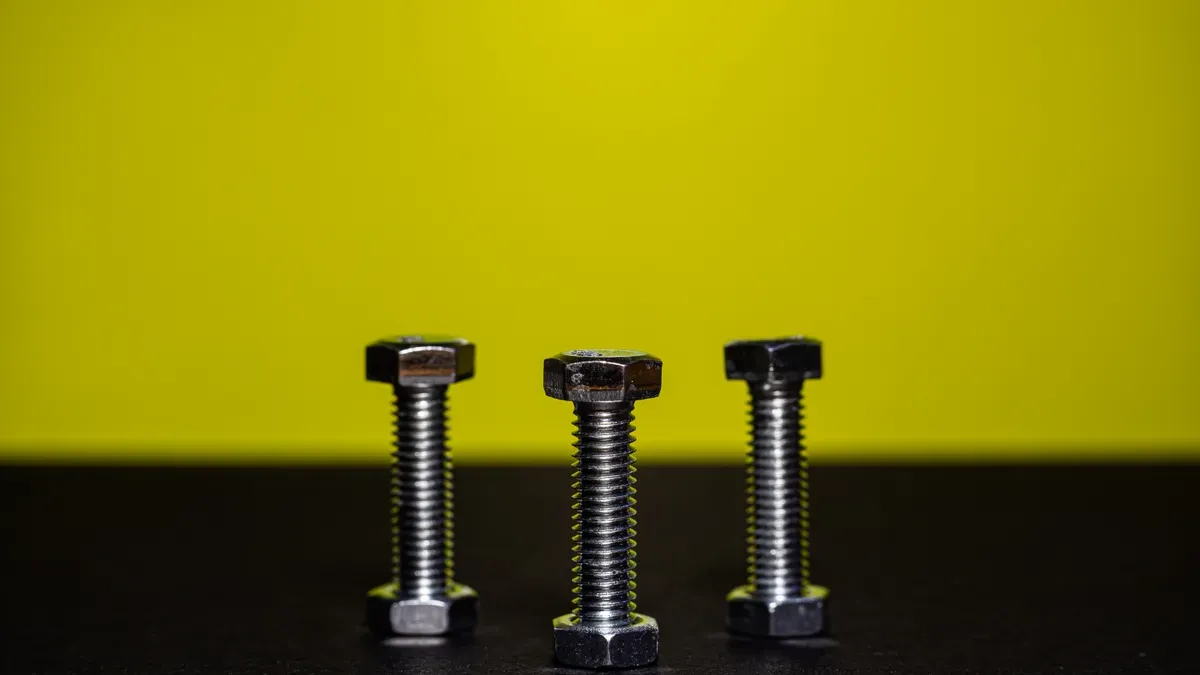
You want a bolt that is strong and easy to use. It should also work in many ways and not cost too much. Most of the time, a hex headed bolt is the best pick. You can use a wrench to tighten it. This helps you make it very tight and safe. The bolt spreads force well, so it is good for tough jobs. It does not hurt other materials when you put it in or take it out.
Types of bolts overview
Common bolt types
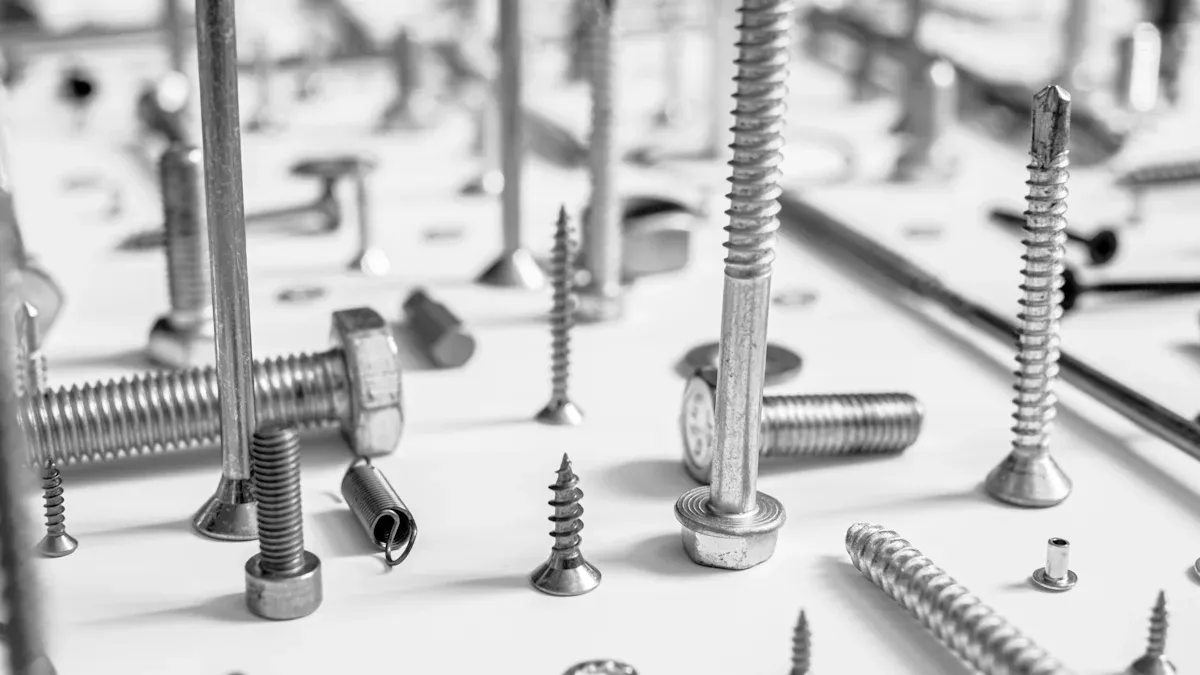
You find many bolts in building and factories. Each bolt has its own shape and job. You must pick the right bolt for your work. Here are some bolts you see a lot:
Hex headed bolt
Hex headed bolts are everywhere you look. The head has six sides. You can use a wrench to turn it. It is easy to make it tight. This bolt works in metal, wood, and machines. You can get it in many sizes and materials.
Carriage bolt
Carriage bolts have a round head and a square neck. The neck keeps the bolt from spinning when you tighten the nut. You use carriage bolts for wood projects. They hold wood together and do not harm the surface.
Socket head bolt
Socket head bolts have a round head with a hex hole. You use an Allen wrench to put them in. These bolts fit in small spaces. You see them in machines and equipment where space is tight.
Square bolt
Square bolts have a head with four sides. You can use a wrench or pliers to turn them. You use square bolts in old buildings or repairs. They look old-fashioned and hold things strong.
Flange bolt
Flange bolts have a washer built under the head. The washer spreads the force and keeps surfaces safe. You use flange bolts in cars and machines. You do not need a separate washer, so it saves time.
Tip: Pick the bolt that fits your material and job. This helps you get strong and lasting results.
Key differences
You must compare bolts to choose the best one. Each bolt has special parts and uses. The table below shows how they are different:
|
Bolt Type |
Design Features |
Performance Characteristics |
Applications |
|---|---|---|---|
|
Hex headed bolt |
Six-sided head for easy wrench use |
High strength and versatility |
Construction, machinery, general use |
|
Carriage bolt |
Round head, square neck to prevent turning |
Secure fastening in wood |
Woodwork, furniture |
|
Socket head bolt |
Cylindrical head with hex socket |
Fits tight spaces, strong grip |
Machinery, equipment |
|
Square bolt |
Four-sided head |
Vintage look, strong fastening |
Restoration, old structures |
|
Flange bolt |
Built-in washer under head |
Spreads load, protects surfaces |
Automotive, machinery |
You also need to think about what the bolt is made of. Different materials work for different jobs. The table below shows common materials and where you use them:
|
Bolt Type |
Material |
Application |
|---|---|---|
|
Carbon Steel |
Cost-effective |
General-purpose fasteners |
|
Stainless Steel |
Corrosion-resistant |
Marine and outdoor applications |
|
Alloy Steel |
High strength |
Heavy-duty applications |
|
Brass |
Decorative |
Electrical applications |
|
Aluminum |
Lightweight |
Aerospace and lightweight constructions |
|
Titanium |
High strength-to-weight ratio |
Aerospace and critical applications |
Bolts come in many shapes, strengths, and uses. You should pick the bolt that fits your project and material. This helps you build safely and quickly.
Hex headed bolt comparison
Strength and durability
Load capacity
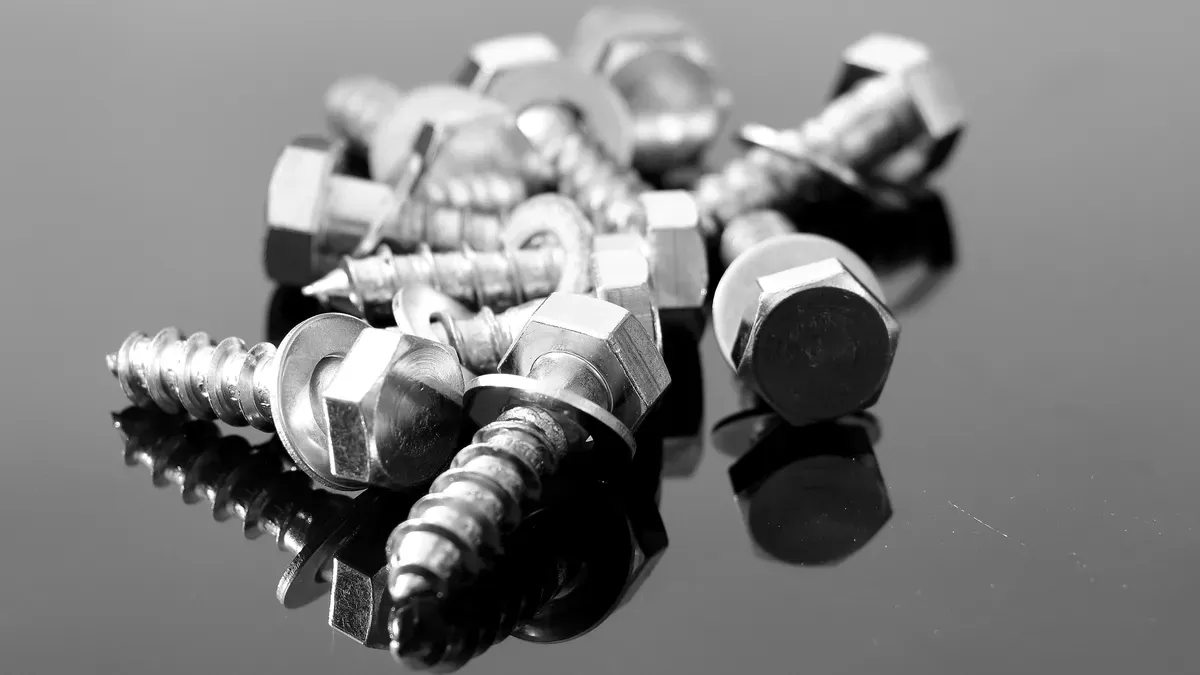
You want a bolt that holds strong under pressure. A hex headed bolt gives you high load capacity. You see this in bridges, skyscrapers, and heavy machines. The wide head spreads force over a larger area. This reduces stress points and lowers the chance of failure. Hex bolt designs let you use high torque, so you can tighten them more than many other bolts. You get better grip and less risk of slipping.
-
Hex headed bolts offer superior load distribution and strength.
-
The large bearing surface reduces stress points in high-pressure jobs.
-
High-strength steel hex bolts can handle up to 120,000 psi.
-
Grade 8 hex bolts give you even more strength and lower failure rates.
Material quality
The material of a bolt changes how well it works. Hex headed bolts come in many materials. You can pick the right one for your job. Here is a quick look at common materials and their uses:
|
Material |
Strength (psi) |
Corrosion Resistance |
Applications |
|---|---|---|---|
|
Carbon Steel |
Up to 120,000 |
Low |
Heavy-load applications |
|
Stainless Steel |
Varies |
High |
Outdoor and marine applications |
|
Alloy Steel |
Varies |
Moderate |
General use |
You can see that a hex headed bolt made from carbon steel works well for heavy loads. Stainless steel hex bolts resist rust, so you use them outside or near water. Alloy steel bolts give you a balance of strength and cost.
Ease of use
Tool compatibility
You want a bolt that works with tools you already have. Hex headed bolts fit most wrenches and sockets. You can use hand tools or power tools. This makes them easy to install and remove. Other bolts, like Phillips screws, need special drivers and can strip more easily.
|
Feature |
Hex Headed Bolts |
Phillips Screws |
|---|---|---|
|
Resistance to Stripping |
Less prone to stripping |
Prone to camming out under torque |
|
Torque Application |
High torque can be applied |
Requires firm pressure to avoid slipping |
|
Clamping Force |
Easier to achieve high clamping force |
Limited by design |
|
Accessibility |
Long shafts available for recessed areas |
Standard length only |
|
Manufacturing Cost |
Inexpensive to manufacture |
N/A |
You get more control with a hex bolt. You can reach tight spots with long tools. You also save money because hex head bolts cost less to make.
Installation and removal
You can install and remove a hex headed bolt quickly. The six-sided head gives you a good grip. You do not need to worry about the tool slipping. You can also use power tools for faster work. This saves time on big projects. Other bolts, like socket head bolts, fit in small spaces but need special tools. Carriage bolts work well in wood but do not handle as much torque.
Tip: Use a hex headed bolt when you want fast, safe, and easy installation.
Maintenance and replacement
Standardization
Hex headed bolts follow strict standards. You find them in the ASME B18.2.1 standard. This means you can swap them out with new ones easily. You do not need to worry about size or thread type. Here is a look at some standard features:
|
Standardization Aspect |
Description |
|---|---|
|
Perforation Spacing |
1⁄2 inch (12.7 mm) |
|
Thread Type |
5⁄32 inch (4.0 mm) Whitworth |
You get peace of mind knowing your hex bolt will fit every time.
Accessibility
You can check and replace a hex headed bolt with little effort. You look for bent shanks, stripped threads, or cracked heads during visual checks. If you see damage, you replace the bolt right away. You can also re-tighten hex head bolts if they are not damaged. This keeps your project safe and strong.
-
Visual checks help you spot problems early.
-
Replace bolts that show cracks, bends, or heat damage.
-
Re-tighten only if the bolt looks good and has not failed before.
Hex headed bolts are easy to find in stores and online. You do not need to search for rare sizes or shapes. This makes your work faster and less stressful.
Note: Hex headed bolts give you a mix of strength, ease of use, and simple maintenance. You can trust them for most jobs, from home repairs to big buildings.
Data Chart: Performance Comparison of Common Bolt Types
|
Bolt Type |
Max Strength (psi) |
Tool Compatibility |
Installation Speed |
Standardization |
Typical Applications |
|---|---|---|---|---|---|
|
Hex headed bolt |
Up to 120,000 |
High |
Fast |
High |
Construction, machinery |
|
Carriage bolt |
Up to 60,000 |
Medium |
Medium |
Medium |
Woodwork, furniture |
|
Socket head bolt |
Up to 100,000 |
Medium |
Slow |
High |
Equipment, tight spaces |
|
Square bolt |
Up to 80,000 |
Low |
Slow |
Low |
Restoration, old builds |
|
Flange bolt |
Up to 100,000 |
High |
Fast |
High |
Automotive, machinery |
You see that a hex headed bolt stands out for its strength, tool compatibility, and speed. You can use it in many places and trust it to last.
Application suitability
Construction uses
Hex headed bolt in construction
You see hex headed bolts in almost every building job. These bolts are strong and easy to put in. You can use a wrench to make them tight and safe. Hex headed bolts work well in steel beams and concrete anchors. They also work in heavy frames. You find them in bridges, tall buildings, and homes. Their sizes are standard, so you can replace them easily. You do not wait long because stores have them in stock.
Other bolts in construction
Sometimes you need special bolts for certain jobs. Structural screws hold better in softwood than regular bolts. Carriage bolts keep wood safe and stop spinning when you tighten them. Square bolts are good for old buildings that need a vintage look. The table below shows how structural screws and regular bolts compare:
|
Parameter |
Structural Screws |
Traditional Bolts |
Advantage |
|---|---|---|---|
|
Pull-out Strength |
2,800 lbs |
1,850 lbs |
51% higher |
|
Shear Strength |
4,200 lbs |
2,750 lbs |
53% higher |
|
Vibration Resistance |
Excellent |
Good |
Superior holding |
|
Corrosion Resistance |
No Red Rust after 3,000 hours |
Red Rust after ~500 hours |
Lasts 6x longer |
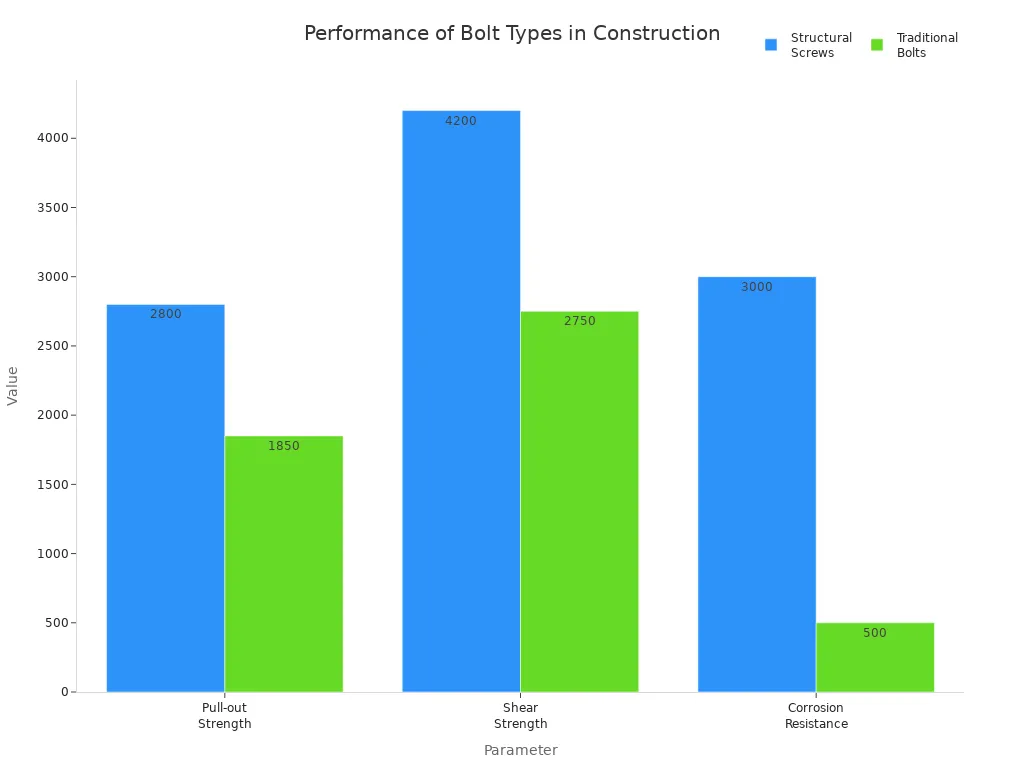
You must pick the right bolt for your job and material. Structural screws are best for wood. Hex headed bolts are better for steel and concrete.
Automotive and machinery
Hex headed bolt in automotive
You trust hex headed bolts for car and truck safety. These bolts hold engine parts and frames together. They keep things tight even when cars shake or move fast. Hex headed bolts do not rust if you pick the right kind. You see them in cars, trucks, and big machines. Picking the right bolt helps the whole system work well.
-
Hex headed bolts give you strength and safety.
-
You use them for tough jobs.
-
They last a long time and work well.
Socket and flange bolts in machinery
You use socket head bolts when space is small. These bolts are very strong, up to 180,000 psi. You put them in with an Allen wrench, which fits tight spots. Flange bolts spread force and keep surfaces safe. They are great for cars and machines. The table below shows how socket head and hex headed bolts are different:
|
Bolt Type |
Strength (Tensile) |
Best Use Cases |
|---|---|---|
|
Socket Head |
180,000 psi |
High-load, confined spaces |
|
Hex Head |
150,000 psi |
High-corrosion environments, structural joints |
|
Flange Bolts |
N/A |
Surface protection, automotive and machinery |
You pick socket head bolts for heavy loads and small spaces. You use flange bolts to protect surfaces and spread out force.
Specialized applications
Carriage bolts for wood
You use carriage bolts for wood projects. The round head and square neck stop spinning and keep wood safe. Carriage bolts hold furniture, decks, and wood frames together. You get a neat look and do not hurt the wood. These bolts are best when you want safety and a nice finish.
Square bolts for niche uses
You choose square bolts for old or special projects. The four sides give an old-style look. You use them in historic buildings and old furniture. Square bolts hold things tight and match the old design.
Tip: Always pick the bolt that fits your project. Special bolts fix special problems. Hex headed bolts work for most jobs.
Bolt versatility vs. specialization
You see hex headed bolts used in many fields. They are more useful than special bolts. The table below shows the differences:
|
Feature |
Hex Head Bolts (Aluminum 6061-T6) |
Other Bolt Types (ASTM A325, A490) |
|---|---|---|
|
Versatility |
High |
Low |
|
Strength-to-Weight Ratio |
Incredible |
Varies |
|
Corrosion Resistance |
Superior |
Depends on material |
|
Application Range |
Wide |
Specialized |
|
Weight Efficiency |
Excellent |
Not optimized |
You get many benefits from hex headed bolts in building, cars, machines, and repairs. Special bolts are for narrow jobs, but hex headed bolts fit many needs. You save time and money by using bolts that work in lots of ways.
Alert: For help picking the right bolt, check the Fastener Quality Act for rules and tips.
Cost and availability
Price comparison
Hex headed bolt pricing
You often find that hex headed bolts cost less than many specialty bolts. Manufacturers produce these bolts in large quantities, which lowers the price for you. When you buy hex headed bolts in bulk, you get even better deals. Bulk purchasing gives you stable prices and a steady supply. This helps you save money, especially if you need many bolts for a big project. Standardization also means you do not pay extra for custom sizes or shapes.
Other bolt types pricing
Other bolt types, such as socket head, carriage, or square bolts, usually cost more. These bolts may require special materials or unique shapes. You might pay a premium for bolts that fit niche applications. Specialty bolts often come in smaller batches, so the price per bolt goes up. If you need a rare size or finish, you may wait longer and pay more.
Here is a quick comparison of typical costs and availability:
|
Bolt Type |
Average Cost (per 100 units) |
Availability |
|---|---|---|
|
Hex headed bolt |
$12–$20 |
Very High |
|
Carriage bolt |
$18–$28 |
High |
|
Socket head bolt |
$22–$35 |
Medium |
|
Square bolt |
$25–$40 |
Low |
|
Flange bolt |
$20–$32 |
High |
Note: Prices can change based on material, size, and finish. You get the best value when you choose standard hex headed bolts for most jobs.
Market access
Local stores
You can walk into almost any hardware store and find hex headed bolts in many sizes. These bolts fill the shelves because builders and repair shops use them every day. You do not need to search for a specialty supplier. If you need a replacement, you can get it quickly. Other bolt types, like square or socket head bolts, may not be in stock. You might need to order them and wait for delivery.
Online suppliers
Online suppliers offer a wide range of bolts. You can find hex headed bolts in every size, material, and finish. Most online stores keep large inventories of these bolts, so you get fast shipping and bulk discounts. Specialty bolts are also available online, but you may see higher prices and longer wait times. Standardized hex headed bolts give you peace of mind because you know you can always find what you need.
Tip: Choose standardized hex headed bolts when you want to save time and money. You get better prices, easy access, and fewer sourcing problems.
Pros and cons summary
Hex headed bolt pros
You get many advantages when you choose a hex headed bolt for your project. These fasteners stand out for their reliability and ease of use.
-
You can tighten a hex headed bolt with a simple wrench. This makes installation fast and safe.
-
You find these bolts in many sizes and materials. You can match them to almost any job.
-
You get high strength. Hex headed bolts hold up under heavy loads in construction and machinery.
-
You can replace these fasteners easily. Stores and suppliers keep them in stock.
-
You use the same tools for many hex headed bolts. This saves you time and money.
-
You see clear markings on most hex headed bolts. This helps you check the grade and size quickly.
-
You can trust the standards. Hex headed bolts follow strict rules for size and thread type.
-
You get good load distribution. The wide head spreads force and protects surfaces.
-
You can use these bolts in wood, metal, or concrete. They work in many fields.
-
You save money. Hex headed bolts cost less than many specialty fasteners.
Tip: Choose a hex headed bolt when you want a strong, easy-to-find, and versatile fastener.
Hex headed bolt cons
You also need to know the limits of a hex headed bolt. These fasteners do not fit every situation.
-
You may not use a hex headed bolt in very tight spaces. The head needs room for a wrench.
-
You see these bolts rust if you pick the wrong material for outdoor jobs.
-
You might not get a smooth look. The head sticks out more than some other fasteners.
-
You can strip the threads if you use too much force or the wrong tool.
-
You may need washers for some surfaces. The head alone does not always protect soft materials.
Note: Always check your project needs before you pick a hex headed bolt. Some jobs need special fasteners.
Other bolt types pros
You find other bolt types that solve special problems. These fasteners offer unique benefits.
-
You use carriage bolts for wood. The round head and square neck stop spinning and protect the surface.
-
You pick socket head bolts for machines with tight spaces. The small head fits where a wrench cannot reach.
-
You choose flange bolts when you want to spread force without a separate washer.
-
You select square bolts for old buildings. The shape matches vintage designs and adds strength.
-
You get better pull-out strength with some specialty fasteners, like structural screws, in wood.
Alert: Use the right bolt for your material and design. Specialty fasteners can make your project safer and last longer.
Other bolt types cons
You may find that other bolt types have several drawbacks when compared to hex headed bolts. These fasteners often do not give you the same level of reliability or ease of use. You should know these limits before you choose a bolt for your project.
-
Many specialty bolts have smaller heads. This design can make it hard for you to apply enough force. You may struggle to tighten these fasteners as much as you need. If you cannot get a strong grip, the bolt may loosen over time.
-
Some bolt types, like carriage bolts, do not allow you to use a wrench on the head. You must rely on the nut for tightening. This can slow down your work and make installation harder, especially in tight spaces.
-
Socket head bolts require special tools, such as Allen wrenches. If you do not have the right tool, you cannot install or remove these fasteners. This can cause delays and frustration on the job.
-
Square bolts and other vintage fasteners may not fit modern tools. You might need to search for special equipment, which adds time and cost to your project.
-
Specialty bolts often come in fewer sizes and materials. You may not find the exact bolt you need at your local store. This can force you to order online and wait for delivery.
You also need to think about how these fasteners handle stress. Many other bolt types do not spread force as well as hex headed bolts. The smaller bearing surface can create stress points. This can lead to uneven load distribution and a higher risk of the bolt failing early, especially in heavy-duty jobs. You want your fasteners to last, but these design limits can shorten their lifespan.
-
Some bolts, like carriage bolts, work best in wood but do not perform well in metal or concrete. You may need to buy different fasteners for each material, which increases cost and complexity.
-
Flange bolts can protect surfaces, but the built-in washer may not fit every application. You might still need extra washers or supports.
-
Specialty bolts often cost more. You pay a premium for unique shapes or materials. If you need many fasteners, this can raise your project budget.
Alert: Always check if a bolt type matches your tools, materials, and load needs. Using the wrong fasteners can lead to early failure and safety risks.
You should weigh these cons before you pick a bolt. Hex headed bolts give you more flexibility and fewer headaches for most jobs. Other fasteners have their place, but you need to know their limits.
You need to pick fasteners by looking at strength, how easy they are to put in, how long they last, price, and if they follow rules. Hex headed fasteners are great because you can install them fast, they are strong, and you can swap them out easily. These fasteners work well in building, cars, and factories. Other fasteners are better for wood or small spaces. Think about what your project needs and what materials you are using before you choose a bolt. Check the table below to help you decide:
|
Criteria |
Description |
|---|---|
|
Strength |
Withstand heavy loads |
|
Installation Efficiency |
Save time on site |
|
Durability |
Last for years |
|
Cost |
Fit your budget |
|
Compliance |
Meet safety standards |
FAQ
What are the main bolt head types?
You see several bolt head types, including hex, square, socket, carriage, and flange. Each head shape fits different tools and jobs. You choose the right head for your project to make installation easier and safer.
How do I select the best types of fasteners for my project?
You look at material, load, environment, and access. You match types of fasteners to your needs. Hex bolts work for most jobs, but other bolt head types fit special tasks like woodwork or tight spaces.
Why do hex bolt head types work well in construction?
Hex bolt head types let you use a wrench for high torque. You get strong connections and easy replacement. You find hex bolts in steel beams, concrete anchors, and frames because they meet safety standards.
Are all bolt head types easy to find in stores?
You find hex and flange bolt head types in most stores. Specialty types of fasteners, like square or socket heads, may require online orders. You save time by choosing common bolt head types.
What makes types of fasteners important in machinery?
You need types of fasteners that handle vibration and heavy loads. Socket and hex bolt head types give you strength and fit tight spaces. You keep machines safe and running by picking the right fastener.
Can I use different bolt head types for wood projects?
You use carriage bolt head types for wood. The round head and square neck stop spinning and protect surfaces. Other types of fasteners, like hex bolts, also work in wood but may need washers.
How does cost vary between bolt head types?
You pay less for standard hex bolt head types. Specialty types of fasteners, like socket or square heads, cost more due to unique shapes or materials. You save money by using common bolt head types for most jobs.
Get Quote
Welcome To Know Our Products
Get Product and Service Information
Follow us
We provide OEM service and focus on stable quality, competitive pricing and responsive export support.


Contact Info
Add:Dongmingyang Industrial Park, Mingguan Town, Yongnian District, Handan City, Hebei Province China
Export salesman:
WhatsApp:+86 18830064300
E-mail: sales@hgtfix.com
Export salesman:
WhatsApp
+86 18830064300
E-mail:
Copyright © 2022 HEBEI YONGYI FASTENERS MANUFACTURING CO.,LTD Power by 300.cn | SEO