Welcome to Yongyi Fasteners, Your Reliable Fastener Supply Partner!

-
ProductsWe supply flat washers, spring washers, drop-in anchors, anchor bolts, hex nuts, hex bolts, sleeve anchors, threaded rods and OEM fastener products to DIN, BS, ANSI and MS standards.

-
About usHEBEI YONGYI FASTENERS MANUFACTURING CO.,LTD is located in China's largest fasteners production base Yongnian fasteners centre.
-
NewsHebei Yongyi Fasteners shares company updates, product knowledge and fastener industry news for global buyers.
-
ServiceThe products sold throughout the domestic and exported to Southeast Asia and Europe and other countries and regions. Our products win good reputation with domestic and foreign customers.



YONGYI FASTENERS
Support stable quality from material selection, processing and inspection to final delivery.
FOCUS ON HOT SPOTS

How to Choose the Right Threaded Rods for Your Project
Published:
2026-05-26
Author:
YONGYI FASTENERS
Choose the best threaded rods for your project by considering load, material, thread type, and environment to ensure safety and lasting performance.
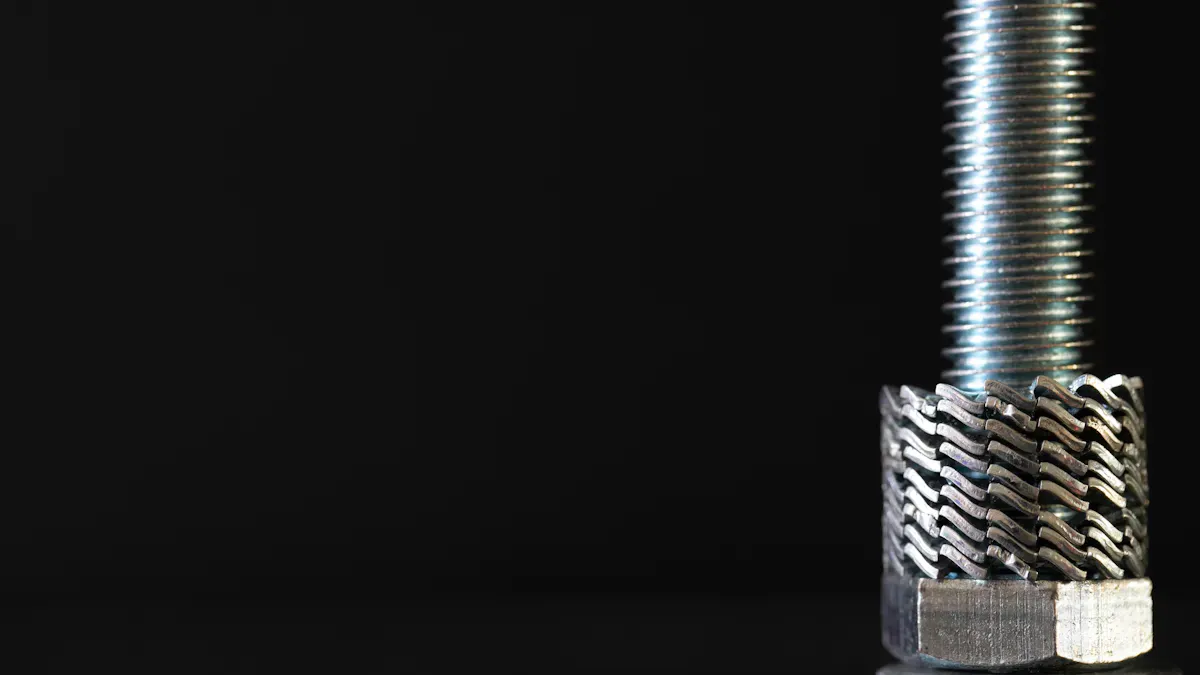
When you pick the right threaded rods, your project goes well. Imagine building a deck or putting in heavy machines. You must think about load, material, thread type, length, strength, and where you will use it. If you forget these things, you might have problems like:
Bad fit
Rust happens early
Joints get loose
The project takes longer
Threaded rods help keep things safe and strong. Choose wisely so you do not make expensive mistakes.
Project Requirements
Before you select a threaded rod, you need to understand your project’s specific needs. This means looking at how much weight the rod must hold, what kind of forces it will face, and the environment where you will use it. Making the right choice keeps your project safe and strong.
Load and Application
Weight and Stress
You must know how much weight your threaded rod will support. If you choose a rod that is too weak, it can bend or break. To find the right size, use this formula:
Load Capacity (lbs) = Tensile Strength (psi) x Cross-Sectional Area (sq in)
Check the manufacturer’s specifications for tensile strength. Use a caliper to measure the rod’s diameter. This helps you match the rod to your project’s needs.
Here is a simple chart to help you see how load and stress work for different rod diameters:
You can see that a thicker rod holds more weight. Always check your project’s load requirements before you buy.
Dynamic vs. Static Loads
Think about how the load will act. A static load stays the same, like a shelf holding books. A dynamic load changes, like a machine that vibrates or moves. Threaded rods in dynamic settings need extra strength and durability. If your project involves movement or vibration, choose a rod with a higher safety margin.
Environmental Factors
Indoor vs. Outdoor
Where you use the threaded rod matters. Indoor projects, like supporting electrical utilities or cable trays, face less moisture and fewer temperature changes. Outdoor projects, such as decks or exposed piping, need rods that resist rust and weather.
Corrosion and Temperature
If your project faces moisture, chemicals, or extreme temperatures, you need a rod that can handle these conditions. Stainless steel threaded rods work well in wet or chemical environments because they resist corrosion. Mild steel rods are good for dry, indoor spaces where strength is the main concern.
Tip: Always match the rod material to your environment. This prevents early rust and keeps your project safe for longer.
Threaded rods play a key role in many fields. In construction, you use them to support ventilation systems, piping, and cable management. In fabrication, they make assembly and maintenance easier. Each application has its own demands, so always match the rod to your specific use.
For more details on load calculations and environmental standards, you can visit the American Institute of Steel Construction’s guidelines.
Material Selection for Threaded Rods
Steel
Steel is a common choice for threaded rods. It is strong and reliable. People use steel rods in factories and big buildings. Mild steel costs less and works well inside where it is dry. Carbon steel is good for short-term use and places with little water. Alloy steel is very strong and used for heavy jobs like pressure vessels.
Note: ASTM A193 B7 grade steel is used for strong needs. It is found in pressure vessels and big machines.
Here is a chart that shows different steel types:
Stainless Steel
Stainless steel rods do not rust easily. You use them where there is water, chemicals, or outside. Grade 304 and 316 stainless steel do not rust much. Grade 316 is better for boats and sea jobs. Stainless steel is also good for food and chemical plants.
Tip: ASTM A193 B8 and B8M grades are best for chemicals and sea jobs. They last long and keep things safe.
Here is a table for stainless steel uses:
You can find rust rules at NACE International.
Brass and Other Materials
Brass rods are used in electric work. They are easy to shape and keep their size. Brass does not rust and lasts a long time. But brass is heavier and costs more than aluminum. This can make shipping cost more.
Other materials like aluminum are light but not as strong. You need to pick the right material for your project so it works well and lasts.
Callout: Always check if the threaded rod material is good. This helps your project last longer and not break early.
Here is a chart to compare materials:
Picking the right rod material makes your project better. It stops rust, lowers repairs, and keeps things safe. The material you choose changes the price, how long it lasts, and how well it works. Always pick what fits your job and where you use it.
Pros and Cons
Corrosion Resistance
You should think about corrosion resistance when picking a threaded rod. If you work outside or in wet places, rust can make fasteners weak. Stainless steel rods protect best against rust. Brass also fights rust well, so people use it for electric or marine jobs. Steel rods without a coating can rust fast if they get wet. Galvanized steel gives better protection, but it does not last as long as stainless steel. If you want your project to last, always pick the right rod for the environment.
Tip: For places with lots of moisture or chemicals, use stainless steel or brass. This keeps your work strong and safe.
Strength and Durability
Strength and durability are important for heavy loads or vibration. Steel rods are very strong and work well in buildings and machines. Stainless steel rods are strong too, and they are best where you need both strength and rust protection. Brass rods are softer, so use them for lighter loads or when you need electricity to flow. Aluminum rods are light but not very strong, so do not use them for building support.
Here is a quick comparison:
If you want your project to last, always check the strength rating. This helps you keep your work safe and avoid problems.
Cost and Availability
Cost and how easy it is to find rods can change your choice. Steel rods are cheap and easy to get. Stainless steel costs more, but it lasts longer and fights rust better. Brass rods cost the most and are hard to find in big sizes. Aluminum rods are cheap and light, but they are not strong enough for tough jobs.
Steel: Good for small budgets and indoor jobs.
Stainless steel: Worth more money for outside or tough places.
Brass: Pick for special jobs where rust and looks matter.
Aluminum: Best for projects where weight is more important than strength.
Note: Always think about both cost and quality. Saving money on the wrong rod can cause bigger problems later.
When you look at these pros and cons, you make better choices for your project. You keep your work good and avoid mistakes that cost a lot.
Threaded Rod Size and Length
Choosing the right size and length for your threaded rod is a key step in any project. If you pick the wrong diameter or length, your structure may not hold up. You need to measure carefully and think about how you will use the rod.
Diameter Selection
Load Requirements
You must match the diameter of your threaded rod to the weight it will support. If you use a rod that is too thin, it can bend or snap. For heavy loads, always check the load rating. Engineering standards like ASME B18.31.2 help you find the right size and make sure the rod meets strict rules for strength and fit. ASTM A193 grades such as B7, B8, and B8M give you high strength and corrosion resistance. Surface protection, like zinc plating, adds durability and helps prevent rust. A continuous thread design spreads the load evenly, which lowers the risk of the rod failing from stress.
Check the weight your project needs to support.
Use a thicker rod for higher loads.
Make sure the rod meets engineering standards.
Pick a rod with the right surface protection for your environment.
Standard Sizes
Threaded rods come in many standard sizes. Common diameters include 1/4", 3/8", 1/2", and 5/8". You can find these sizes at most hardware stores. Always check the project plans or building codes before you choose. If you need a special size, you may have to order it or cut threaded rod to fit.
Length and Pitch
Measuring Thickness
Before you buy, measure the total thickness of the materials you want to join. Add extra space for washers and nuts. This helps you pick the right length. If you choose a rod that is too short, it will not reach through all the parts. If it is too long, you may need to cut threaded rod to the right size. Use a tape measure for accuracy.
Tip: Always measure twice before you cut threaded rod. This saves time and reduces waste.
Adjusting Length
Sometimes, you cannot find the exact length you need. In these cases, you can cut threaded rod to fit your project. Use a hacksaw or an angle grinder for a clean cut. After you cut threaded rod, file the ends to remove sharp edges. Thread a nut onto the rod before you cut. When you remove the nut, it cleans the threads and makes it easier to use.
Mark the spot where you want to cut threaded rod.
Secure the rod in a vise.
Cut threaded rod slowly for a straight edge.
File the end and remove the nut to fix the threads.
Thread pitch is also important. It tells you how close the threads are together. Fine threads work better for precise jobs. Coarse threads are easier to start and resist damage. Always match the pitch to the nuts and fasteners you plan to use.
Choosing the right diameter and length for your threaded rod keeps your project safe and strong. Measure carefully, follow standards, and do not rush when you cut threaded rod. This way, you avoid mistakes and get the best results.
Thread Type and Compatibility
Choosing the right thread type and ensuring compatibility with nuts and fasteners keeps your project strong and safe. If you use the wrong thread or mismatched parts, you risk loose joints, stripped threads, or even failure under load. Always check both the thread type and the matching fasteners before you start your assembly.
Coarse vs. Fine Threads
You will find two main thread types on threaded rods: coarse and fine. Each type serves a different purpose.
Coarse threads work best for general assembly. They are easier to start and less likely to cross-thread. You can use them in most building and repair projects.
Fine threads give you about 10% more tensile stress area than coarse threads. This means they can handle higher preload at the same torque. Fine threads work well when you need maximum strength or when the material is thin. You get better control over preload because fine threads allow more turns per millimeter of stretch.
Tip: Use coarse threads for quick assembly and when you need resistance to damage. Choose fine threads for high-strength jobs or when working with thin materials.
Nut and Fastener Compatibility
You must match your threaded rod with the right nut or fastener. If you pick the wrong size or thread pitch, the parts will not fit or hold together well. Always check the specifications before you buy.
Thread Pitch Matching
Thread pitch tells you how close the threads are. Coarse and fine threads have different pitches, so you need to match the nut to the rod. If you use a nut with the wrong pitch, it will not screw on or may damage the threads. Always check the label or use a thread gauge to confirm the match.
Different coatings on rods can also affect how nuts fit. Here is a quick table to help you:
Note: If you use hot-dip galvanized rods, always buy nuts marked for oversize threads. This prevents jamming and makes assembly easier.
Avoiding Cross-Threading
Cross-threading happens when you force a nut onto a rod with mismatched threads or start it at the wrong angle. This can ruin both the rod and the nut. To avoid this:
Start threading the nut by hand.
Make sure the nut turns easily for the first few turns.
If you feel resistance, stop and check the alignment.
You can choose from many nut types for your project:
Hex Nut: Standard for most jobs.
Nylock Nut: Stops loosening from vibration.
Flange Nut: Spreads load, no extra washer needed.
Wing Nut: Tighten by hand, good for quick changes.
Cap Nut: Covers threads for safety and looks.
Square Nut: Better grip for heavy-duty use.
T Nut: Anchors in wood or soft materials.
Castle Nut: Locks with a pin for critical joints.
Jam Nut: Used as a lock with another nut.
Coupling Nut: Joins two rods or extends length.
Always match the nut type and thread to your application. This keeps your assembly secure and easy to maintain.
By checking thread type and compatibility, you avoid common mistakes and build a safer, longer-lasting project.
Strength Ratings and Certifications
When you select a threaded rod for your project, you must check its strength ratings and certifications. These ratings show how much force the rod can handle before it fails. Certifications prove that the rod meets strict standards for safety and quality.
Grades and Tensile Strength
Threaded rods come in many grades. Each grade has a different tensile strength, yield strength, and hardness. You must match the grade to your project’s demands. For example, industrial jobs need high-strength rods, while light-duty tasks can use lower grades.
Here is a table that compares common grades:
You can see that higher grades offer more strength. If you work with heavy machinery or structural supports, you need a threaded rod with high tensile strength. For lighter jobs, you can use lower grades.
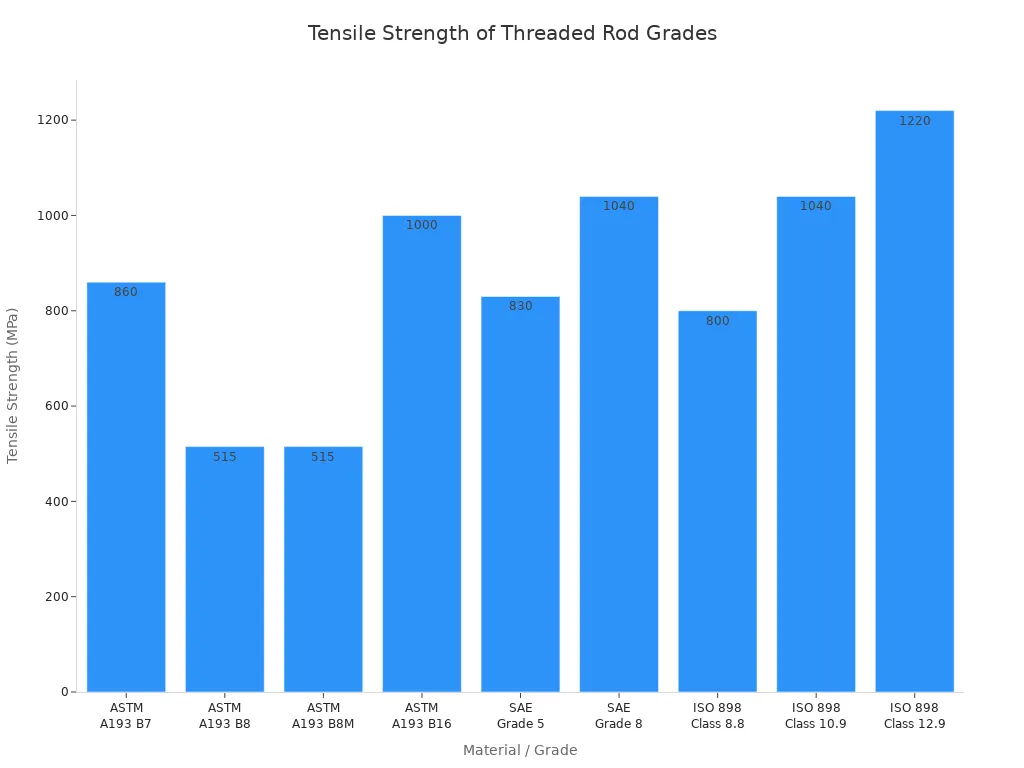
Tip: Always check the grade and strength rating before you buy a threaded rod. This keeps your project safe and prevents failures.
Safety Standards
You must follow safety standards when you use threaded rods. These standards protect people and property. They also help you pass inspections and avoid costly mistakes.
Building Codes
Building codes set rules for strength, installation, and materials. You must use threaded rods that meet these codes. For example, the International Building Code (IBC) gives clear guidelines for fasteners in construction. You can find more details at International Code Council.
Check local codes before you start your project.
Use rods with certifications like ASTM, ISO, or SAE.
Keep records of grades and certifications for inspections.
Proper Installation
Proper installation is just as important as choosing the right threaded rod. If you install a rod incorrectly, it can fail even if it has a high strength rating.
Tighten nuts to the correct torque.
Use washers to spread the load.
Avoid over-tightening, which can damage threads.
Inspect rods for defects before use.
Note: Always follow manufacturer instructions and safety standards. This ensures your threaded rod performs as expected.
When you check strength ratings and certifications, you protect your project from risks. You also meet legal requirements and keep everyone safe.
Stud Bolts vs. Threaded Rods
Key Differences
It is important to know how stud bolts and threaded rods are different. They look alike, but they do not do the same job. Stud bolts are best for joints that must stay tight and strong. Threaded rods are good when you need to hang, support, or fix things.
Here is a table that shows the main differences:
Note: Stud bolts need careful checks and paperwork. Threaded rods let you make changes on site and are good for many uses.
Choosing the Right Fastener
Pick the fastener that fits your project’s needs. Stud bolts are best for places with high pressure, like flanges or machines. Use them when you need a tight hold and steady force. You often see these bolts in oil, gas, and power plants.
Threaded rods are better when you need to hang, support, or change things easily. You can cut them to the right size for your job. They work well for pipe hangers, ceiling supports, or anchors. People use threaded rods a lot in building and HVAC work because they are easy to adjust.
Think about these things when you choose:
Pick stud bolts if you need strong fasteners and lots of checks.
Choose threaded rods for jobs that need support or can change.
Stud bolts cost more because they need better grades and more checks.
Threaded rods cost less and are good for most support jobs.
Tip: Always look at the material, finish, and paperwork before you buy. Threaded rod makers have many choices for different jobs and places.
When you pick the right fastener, your project is safer and easier to take care of. This helps your work last longer and stay strong.
Common Mistakes When Choosing Threaded Rods
Overlooking Environmental Factors
You might forget to check where your project will live. This mistake can cause big problems. If you use the wrong rod in a wet or salty place, rust will show up fast. Corrosion weakens the rod and can make your structure unsafe. For example, if you use plain steel outdoors, rain and moisture will eat away at the metal. In chemical plants, fumes can break down rods that are not made for harsh chemicals. Always match the rod material to the environment. Stainless steel works well outside or in damp places. Brass resists corrosion in electrical jobs. If you ignore these factors, you may face early failure, safety risks, and expensive repairs.
Tip: Check for moisture, chemicals, and temperature swings before you pick your rod. This step keeps your project strong and safe.
Mismatching Thread Types
You need to match thread types every time you join parts. If you mix coarse and fine threads, or use the wrong pitch, you can damage both the rod and the nut. This mistake can ruin your project and put people at risk. Forcing mismatched threads can shear off the tops of the threads or crack the parts you want to join. In some cases, this leads to leaks, blowouts, or even total failure of the assembly.
Here is a table showing what happens when you mismatch thread types:
You can avoid these problems by always checking the thread pitch and type before assembly. Use a thread gauge if you are not sure. Start nuts by hand to feel for smooth movement. If you feel resistance, stop and check the fit. This habit saves time and prevents costly damage.
Ignoring Load Requirements
You must know how much weight your rod will hold. If you guess or skip this step, you risk bending, snapping, or total collapse. Many people choose rods based on what is easy to find, not what the project needs. This shortcut can lead to disaster, especially in heavy-duty jobs like supporting beams or machinery. Always check the load rating and compare it to your needs. Use charts or ask an engineer if you are unsure. Pick a rod with a safety margin above your expected load. This practice keeps your project safe and avoids sudden failures.
Note: Never use a rod just because it is available. Always match the size and grade to your load.
You can prevent most mistakes by taking time to check the environment, match thread types, and confirm load needs. Careful planning with threaded rods leads to safer, longer-lasting results.
Skipping Certification Checks
Some people think all threaded rods are alike. But not checking certifications can cause big problems. Certifications show that a threaded rod is strong, safe, and good quality. If you skip these checks, the rod might break or not pass building rules.
Many jobs need rods with special certifications. For example, building sites often want rods that meet ASTM or ISO rules. Factories may ask for rods with test reports you can track. If you do not check, inspectors might say your work is not good. You could have to do the job again, which wastes time and money.
Tip: Always ask for material test certificates (MTC) or mill certificates before you buy. These papers tell you the rod’s grade, what it is made of, and how strong it is.
Here are some common certifications to look for:
If you build a bridge, you need rods that are very strong and have proof. If you make a playground, you must use rods that pass safety rules. Even for home fixes, certified rods help you feel safe.
If you skip certification checks, rods can break, rust, or get loose. In important jobs, this can hurt people or cause legal trouble. You do not want anyone to get hurt or get sued because you used the wrong rod.
You should always:
Ask your supplier for certificates.
Make sure the grade fits your project.
Save your papers for later checks.
If you work in tough places, like chemical plants or near the ocean, certifications are even more important. These places need rods that do not rust and stay strong. Certified rods help you stop big problems and save money.
Alert: Never think a rod is strong just because it looks good. Only certifications can show you its real quality.
By checking certifications, you keep your project, your team, and your name safe. This easy step helps you avoid mistakes and follow the rules.
You should follow simple steps to pick the right fastener. Start by thinking about what your project needs. After that, choose a material that works well where you will use it. Then, figure out the right size and thread type for your job. Always check the strength rating and look for certifications. Know how each fastener is used for different jobs. Go over all these things before you buy anything. If you are not sure, talk to someone who knows more. Make a checklist so you do not forget any step.
Tip: Planning ahead saves money and keeps your project safe.
FAQ
What is the main difference between a threaded rod and a bolt?
A threaded rod has threads along its entire length. You can cut it to any size. A bolt usually has a head and threads only at one end. You use bolts for fixed-length connections.
How do you measure a threaded rod for your project?
You measure the diameter with a caliper. You measure the length with a tape measure. Always add extra length for nuts and washers. Double-check your measurements before you cut the rod.
Can you use a threaded rod outdoors?
Yes, you can use a threaded rod outdoors. Choose stainless steel or galvanized rods. These resist rust and last longer in wet or harsh weather.
What thread type should you pick for vibration-prone equipment?
Pick fine threads for vibration-prone equipment. Fine threads hold better under movement. They resist loosening and provide a stronger grip.
How do you cut a threaded rod without damaging the threads?
Thread a nut onto the rod before cutting. Use a hacksaw or angle grinder. After cutting, remove the nut to clean the threads. File the end for a smooth finish.
Do you need special tools to install a threaded rod?
You need basic tools like wrenches, pliers, and a tape measure. For heavy-duty jobs, use a torque wrench. Always follow safety steps during installation.
What should you check before buying a threaded rod for structural use?
Check the material grade, strength rating, and certifications. Make sure the rod matches your load and environmental needs. Ask for test certificates if your project requires them.
Can you reuse a threaded rod?
You can reuse a threaded rod if it shows no rust, bending, or thread damage. Inspect the rod before reuse. Replace it if you see any wear or defects.
Get Quote
Welcome To Know Our Products
Get Product and Service Information
Follow us
We provide OEM service and focus on stable quality, competitive pricing and responsive export support.


Contact Info
Add:Dongmingyang Industrial Park, Mingguan Town, Yongnian District, Handan City, Hebei Province China
Export salesman:
WhatsApp:+86 18830064300
E-mail: sales@hgtfix.com
Export salesman:
WhatsApp
+86 18830064300
E-mail:
Copyright © 2022 HEBEI YONGYI FASTENERS MANUFACTURING CO.,LTD Power by 300.cn | SEO